 Prompt appointments available
 CQC registered & fully accredited
 Consultant-led care throughout
Inflammation Reduction
The IPL energy targets and closes the small, abnormal blood vessels along the eyelid margins that serve as a major source of chronic inflammation.

Private Dry Eye Care
CES Medical offers Intense Pulsed Light (IPL) therapy - a non-invasive treatment supported by clinical evidence that targets the root cause of chronic dry eye. Our consultant ophthalmologists deliver personalised care designed to restore your comfort and protect your long-term eye health.
Prompt appointments available
CQC registered & fully accredited
Consultant-led care throughout
01
A stable tear film is essential for keeping the surface of the eye healthy, comfortable, and clear. If the tear film becomes unstable, the eyes can feel irritated, inflamed, and persistently dry throughout the day.
Dry eye disease is one of the most common eye conditions in the United Kingdom, affecting approximately one in five adults. It occurs when your eyes are unable to maintain a healthy, stable tear film - either because they do not produce enough tears, or because the tears evaporate too quickly.
A healthy tear film is made up of three layers: a watery layer that provides moisture, a mucus layer that helps tears spread evenly across the eye, and an outer oily layer that prevents the tears from evaporating. This oily layer is produced by tiny glands in your eyelids called the meibomian glands.
When these glands become blocked or stop functioning properly - a condition known as Meibomian Gland Dysfunction (MGD) - the oily layer of your tear film breaks down. Without this protective barrier, your tears evaporate rapidly, leaving the surface of your eye exposed and irritated. MGD is the leading cause of evaporative dry eye, which accounts for the majority of dry eye cases.
Symptom
Description
Gritty or sandy sensation
A feeling of something rough or foreign in your eyes
Persistent dryness
Eyes that feel dry and uncomfortable throughout the day
Redness and irritation
Visible redness, particularly along the eyelid margins
Watering eyes
Paradoxically, dry eyes can trigger excessive reflex tearing
Fluctuating vision
Blurred vision that clears temporarily when you blink
Sensitivity to light
Discomfort in bright environments or when using screens
Tired, heavy eyelids
A feeling of fatigue around the eyes, especially later in the day
If you have been experiencing any of these symptoms persistently, and standard remedies such as artificial tears or warm compresses have not provided lasting relief, you may benefit from a more targeted approach.
02
IPL treatment uses carefully controlled pulses of light applied to the skin around the eyes. It is designed to improve the health of the eyelid margins and the meibomian glands, which play a vital role in producing the protective oily layer of your tears.
By targeting inflammation and restoring oil flow from these glands, IPL helps stabilise the tear film, reduce irritation, and improve the overall comfort of your eyes.
Intense Pulsed Light (IPL) therapy is a safe, non-invasive treatment specifically designed to address the underlying cause of dry eye disease related to Meibomian Gland Dysfunction. Rather than simply managing symptoms, IPL works at the source - restoring the natural function of your meibomian glands so that your eyes can maintain a healthy, stable tear film.
The IPL energy targets and closes the small, abnormal blood vessels along the eyelid margins that serve as a major source of chronic inflammation.
The warmth from the IPL therapy heats and liquefies the thick, stagnant oil that has accumulated within the meibomian glands, restoring their function.
Once the blocked oil is thinned and liquefied, it flows freely from the glands, re-establishing the protective oily layer of the tear film.
Procedure type
Outpatient treatment - no admission required
Duration
Approximately 15-20 minutes per session
Anaesthesia
None required - the procedure is comfortable
Pain level
Most patients feel only a mild, warm snapping sensation
Treatment course
Typically four sessions, spaced 2-4 weeks apart
Recovery
No downtime - return to normal activities immediately
Maintenance
Annual or as-needed sessions to sustain results
03
From your first consultation to ongoing maintenance, we guide you through every step of your IPL treatment.
Your journey begins with a thorough consultation with one of our consultant ophthalmologists. Your eyes will be examined in detail to assess the health of your meibomian glands, the quality of your tear film, and the severity of any inflammation. This assessment will confirm whether MGD is the primary cause of your symptoms and whether IPL therapy is the most appropriate treatment for you.
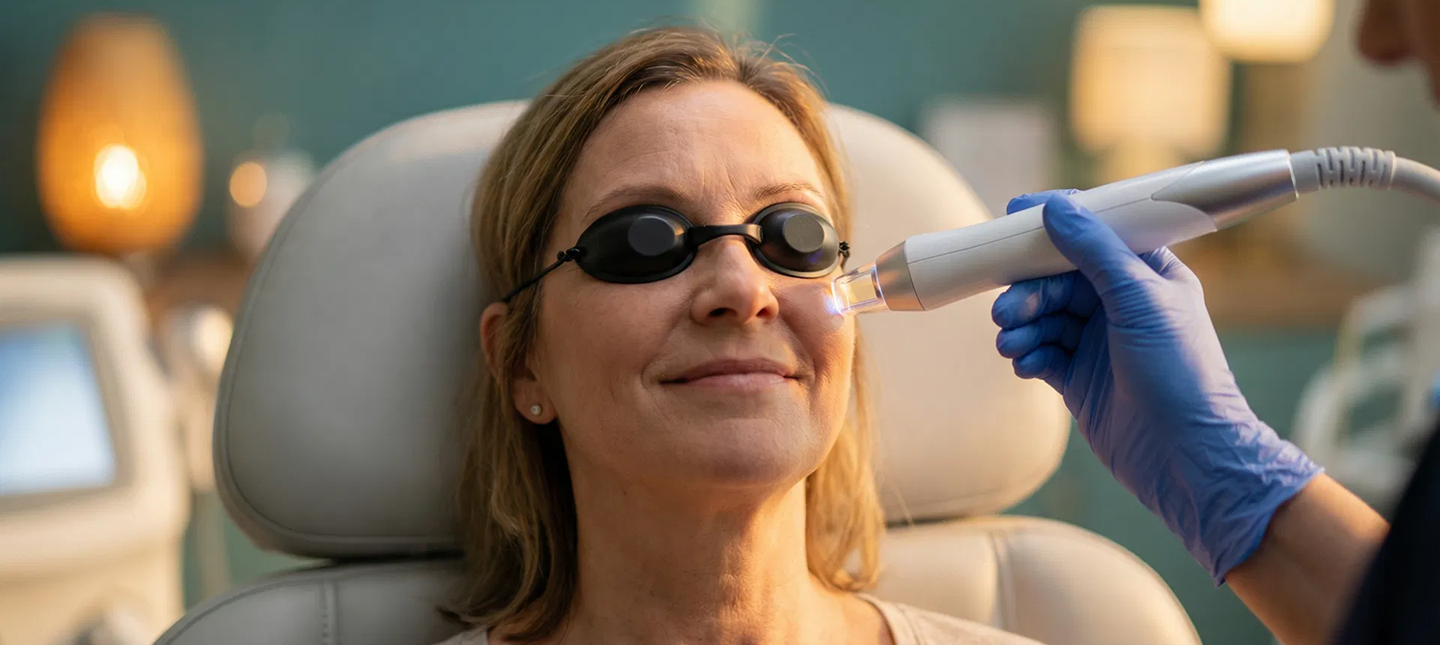
Protective eye shields are placed over your eyes and cooling gel is applied to the skin around your eyelids. Using a handheld IPL device, your clinician delivers a series of gentle light pulses. Following the light therapy, a manual gland expression procedure is performed to help clear the liquefied oil from the meibomian glands. The entire appointment typically takes around 30 minutes.
You can return to your normal activities immediately. A typical course involves four IPL sessions, spaced two to four weeks apart. After completing the initial course, your consultant may recommend maintenance sessions - typically once or twice a year - to sustain the results and keep your meibomian glands functioning well.
Understanding the sensory experience of IPL treatment can help ease any concerns, particularly if this is your first session.
Please get in touch with us if you experience any persistent redness, swelling, blistering, or changes to the skin around the treated area that do not resolve within 24 hours.
04
Unlike artificial tears, which provide temporary symptom relief, IPL addresses the underlying inflammation and gland dysfunction that cause dry eye disease. By restoring normal meibomian gland function, IPL delivers lasting improvement rather than a short-term fix.
IPL is a gentle, outpatient procedure with no injections, no incisions, and no anaesthesia required. Most patients find the treatment comfortable, and there is no recovery period - you can return to your daily routine immediately.
A growing body of clinical research supports the effectiveness of IPL for MGD-related dry eye. Studies have demonstrated significant improvements in meibomian gland function, tear film stability, and patient-reported symptoms following IPL treatment.
With a full course of treatment and periodic maintenance sessions, the benefits of IPL can be sustained over the long term. Many patients report a meaningful reduction in their reliance on artificial tears and a lasting improvement in daily comfort.
By targeting the abnormal blood vessels that drive chronic eyelid inflammation, IPL helps to break the cycle of inflammation and gland blockage that perpetuates dry eye disease.
05
With private treatment at CES Medical, you can typically have your initial assessment and first IPL session scheduled within a matter of weeks. For a condition that affects your comfort and quality of life every day, timely access to treatment can make a meaningful difference.
You will be seen by the same experienced consultant ophthalmologist at every stage - from your initial assessment through each treatment session and follow-up appointment. This continuity ensures that your care is personalised, consistent, and informed by a deep understanding of your individual condition.
Every patient's dry eye is different. Your consultant will design a treatment schedule tailored specifically to your needs, with clinical imaging to monitor your meibomian gland health and adjust your plan as you progress.
Our clinics are designed to provide a calm, welcoming experience. You will receive unhurried, individual attention at every visit - particularly important for patients who may require an ongoing course of treatment over several weeks.
.png)
06
We understand that choosing a treatment for dry eye disease is an important decision. Here are answers to some of the questions our patients most commonly ask about IPL therapy.
Most patients find IPL comfortable and describe it as a brief warm snapping sensation rather than pain. No anaesthesia is usually required.
A typical treatment course is four IPL sessions spaced two to four weeks apart, followed by maintenance treatment if recommended by your consultant.
Some patients notice improvement early in the treatment course, but the best results are usually seen after completing the recommended series of sessions.
Mild redness or warmth around the treated area can happen after IPL, but this usually settles within a few hours.
IPL is designed to improve the underlying inflammation and meibomian gland dysfunction that drive dry eye symptoms, but ongoing maintenance may still be needed.
Not every patient with dry eye is suitable for IPL. Your consultant will assess your symptoms, gland function, and eye health to decide whether it is appropriate for you.
Your clinician will give you personalised instructions, but the page notes that sunscreen should be applied to the treated area for two weeks after each session.
Private IPL treatment does not usually require a GP referral, although CES Medical can advise you on the best route when you contact the team.
Treatment pricing depends on your assessment and treatment plan. Contact CES Medical directly to discuss current private consultation and IPL treatment costs.
If dry eye symptoms are affecting your daily comfort and quality of life, our consultant ophthalmologists are here to help. Contact CES Medical today to book your private dry eye assessment and take the first step towards lasting relief.
CES Medical - Chatham
Kent
CES Medical - Headcorn
Kent
CES Medical - Tunbridge Wells
Kent


 View our Private Cataract Surgery page