CES Medical
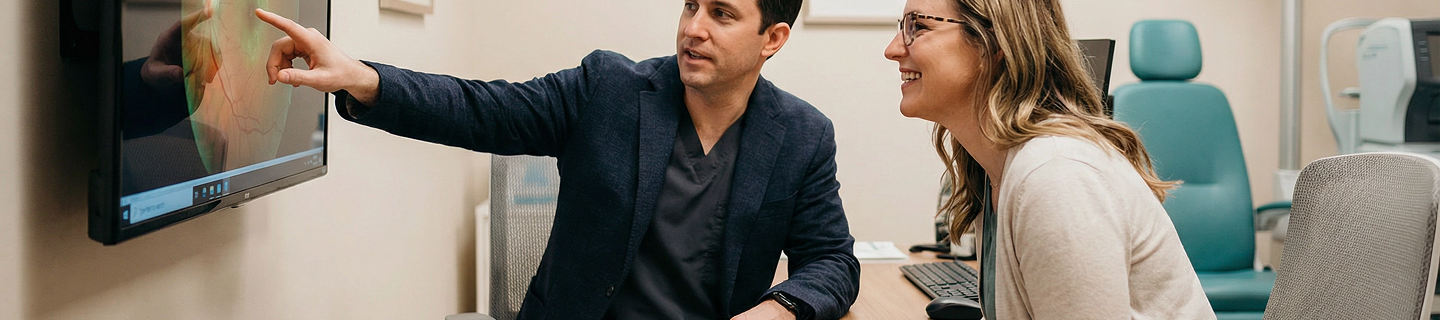
Consultant reviewing retinal scans in clinic

NHS Services

Medical Retina

Specialist diagnosis and treatment for conditions affecting the retina and macula

01

Understanding
Medical Retina
Conditions

The retina is a thin layer of light-sensitive tissue that lines the back of the eye. It converts the light that enters your eye into electrical signals, which are then transmitted to the brain via the optic nerve, allowing you to see. The macula is the small, specialised area at the centre of the retina that is responsible for sharp, detailed central vision - the vision you use for reading, driving, recognising faces, and seeing fine detail.

Medical retina is the subspecialty of ophthalmology concerned with the diagnosis and non-surgical treatment of conditions that affect the retina and macula. At CES Medical, our NHS medical retina service provides expert assessment, monitoring, and treatment for a wide range of retinal conditions, using the latest diagnostic technology and evidence-based treatments.

02

Conditions We
Manage

Central Serous Chorioretinopathy (CSC)

A condition in which fluid accumulates beneath the retina, causing a localised detachment of the macula. It typically affects men aged 20 to 50 and is associated with stress and corticosteroid use. Symptoms include blurred or distorted central vision, a dark area in the centre of vision, and objects appearing smaller or further away than they are. Most cases resolve spontaneously within a few months, though some require treatment with laser or photodynamic therapy.
Retinal Vein Occlusion

Occurs when a vein carrying blood away from the retina becomes blocked, causing swelling and bleeding within the retina. It can affect a branch vein (branch retinal vein occlusion, or BRVO) or the central retinal vein (central retinal vein occlusion, or CRVO). Symptoms include sudden blurring or loss of vision, and treatment typically involves intravitreal injections of anti-VEGF medication to reduce macular oedema.

Retinal Artery Occlusion

A blockage of an artery supplying blood to the retina, causing sudden, painless loss of vision. This is an ophthalmic emergency and requires urgent assessment. While treatment options are limited, it is important to investigate the underlying cause, as retinal artery occlusion can be associated with cardiovascular disease and stroke risk.

Uveitis

Inflammation of the uvea - the middle layer of the eye - which can affect the retina and other structures within the eye. Uveitis can cause pain, redness, light sensitivity, and blurred vision. Treatment depends on the cause and severity and may include steroid eye drops, steroid injections around or inside the eye, or systemic immunosuppressive medication.

Inherited Retinal Dystrophies

A group of genetic conditions that cause progressive degeneration of the retina, leading to gradual vision loss. These include retinitis pigmentosa, Stargardt disease, and cone-rod dystrophies. While there are currently limited treatment options for most inherited retinal conditions, accurate diagnosis is important for genetic counselling, access to support services, and eligibility for emerging gene therapies.

Consultation using retinal imaging technology

Advanced Diagnostic Technology

Accurate diagnosis is the foundation of effective retinal care. At CES Medical, we use a range of advanced imaging technologies to assess the health of your retina in extraordinary detail.

Optical Coherence Tomography (OCT)

Produces high-resolution cross-sectional images of the retina, allowing visualisation of individual retinal layers and detection of subtle abnormalities such as fluid accumulation, membrane formation, or structural changes.

OCT Angiography

A non-invasive imaging technique that maps the blood vessels in the retina without the need for dye injection, helping to identify areas of abnormal blood flow or new vessel growth.

Fluorescein Angiography

A dye is injected into a vein in your arm and photographs are taken as it passes through the retinal blood vessels, revealing areas of leakage, blockage, or abnormal vessel growth.

Fundus Autofluorescence

Uses the natural fluorescence of the retinal pigment epithelium to detect areas of damage or degeneration, particularly useful in monitoring conditions such as dry AMD and inherited retinal dystrophies.

03

Treatment
Approaches

Treatment for medical retina conditions is tailored to the specific diagnosis and the individual patient. The main treatment modalities include:

Intravitreal Injections

Anti-VEGF injections are the mainstay of treatment for conditions involving abnormal blood vessel growth or macular oedema, including wet AMD, diabetic macular oedema, and retinal vein occlusion. Steroid injections may also be used for certain inflammatory conditions.

Laser Treatment

Various forms of laser treatment are used in medical retina, including focal laser for localised areas of leakage, pan-retinal photocoagulation for proliferative conditions, and photodynamic therapy for certain types of abnormal blood vessel growth.

Monitoring and Observation

Many retinal conditions, particularly in their early stages, are best managed through careful monitoring with regular imaging to track any changes over time. This approach ensures that treatment is initiated at the optimal time if the condition progresses.

Your NHS Referral
Pathway

Patients are typically referred to our medical retina service by their optometrist, GP, or through the diabetic eye screening programme. If your optometrist detects an abnormality during a routine eye examination, they can refer you directly to CES Medical for specialist assessment. Urgent referrals are prioritised to ensure timely treatment for sight-threatening conditions.

04

Frequently Asked
Questions

What is the difference between medical retina and surgical retina?

+

Medical retina focuses on non-surgical diagnosis and treatment, while surgical retina manages conditions that need operations such as vitrectomy or retinal detachment repair.

How long do intravitreal injections take?

+

The injection itself usually takes only a few minutes, and the full appointment is typically around 30 to 60 minutes including preparation and checks.

Will I need ongoing treatment?

+

It depends on your diagnosis. Some conditions require a short course of treatment, while others need long-term monitoring or repeat treatment over time.

Can retinal conditions affect both eyes?

+

Yes, some retinal diseases can involve both eyes either at the same time or over time, which is why regular follow-up is important.

Are there any lifestyle changes that can help?

+

Controlling blood pressure, cholesterol, and diabetes, not smoking, and attending screening and follow-up visits can all help protect retinal health.

Need to Be Referred?

To access CES Medical, please ask your Optician to refer you using REGO or your GP using ERS

Our Locations

CES Medical - Chatham

Kent

CES Medical - Headcorn

Kent

CES Medical - Tunbridge Wells

Kent