CES Medical
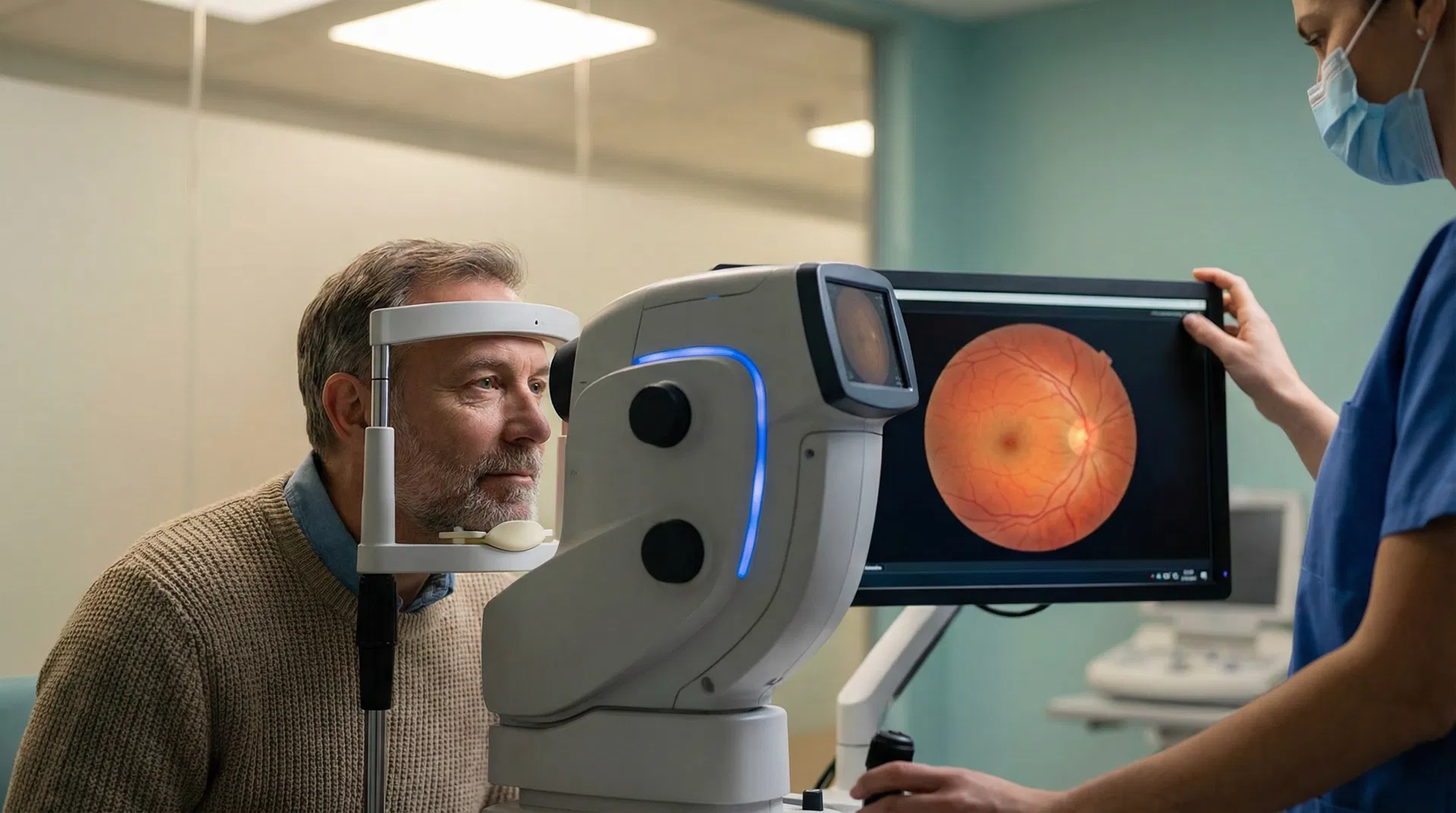
Consultant reviewing retinal scans for diabetic eye disease monitoring

NHS Services

Diabetic Eye Disease

Protecting your sight through expert monitoring and treatment

01

Understanding
Diabetic Eye Disease

Diabetic eye disease is a group of eye conditions that can affect people living with diabetes. It is one of the leading causes of preventable sight loss in working-age adults in the United Kingdom, making regular screening and timely treatment essential. At CES Medical, our NHS diabetic eye service provides comprehensive monitoring and treatment to help protect your vision.

The most common form of diabetic eye disease is diabetic retinopathy, which occurs when persistently high blood sugar levels damage the tiny blood vessels that supply the retina - the light-sensitive tissue at the back of the eye. Over time, these damaged blood vessels can leak fluid, swell, or become blocked, and in more advanced stages, abnormal new blood vessels can grow on the surface of the retina. These changes can lead to progressive vision loss if not detected and treated.

02

Stages of Diabetic Retinopathy

Background Retinopathy

The earliest stage, in which tiny bulges (microaneurysms) develop in the walls of the retinal blood vessels. At this stage, there are usually no symptoms and no treatment is required, but regular monitoring is essential to detect any progression.

Pre-proliferative Retinopathy

A more advanced stage in which the blood vessel damage becomes more widespread. There may be areas of bleeding (haemorrhages) and protein deposits (exudates) within the retina. Vision may still be unaffected at this stage, but closer monitoring is needed.

Proliferative Retinopathy

The most advanced stage, in which the retina responds to poor blood supply by growing new, abnormal blood vessels (neovascularisation). These new vessels are fragile and can bleed into the vitreous cavity (vitreous haemorrhage), causing sudden and severe vision loss. They can also cause scar tissue to form, which can pull on the retina and lead to retinal detachment. Proliferative retinopathy requires prompt treatment.

Diabetic Macular Oedema (DMO)

Can occur at any stage of diabetic retinopathy. It develops when fluid leaks from damaged blood vessels into the macula - the central part of the retina responsible for detailed vision - causing it to swell. DMO is the most common cause of vision loss in people with diabetic retinopathy and can cause blurred or distorted central vision.

Retinal imaging technology used for diabetic eye screening

Symptoms to
Watch For

In its early stages, diabetic retinopathy often causes no noticeable symptoms, which is why regular screening is so critical. As the condition progresses, you may experience:

Gradually worsening vision

Blurred or patchy vision

Floaters (dark spots or strings floating in your vision)

Difficulty seeing in the dark

Sudden vision loss (in cases of vitreous haemorrhage)

It is important to attend your annual diabetic eye screening appointments, even if your vision seems normal. The screening programme uses digital photography to detect early signs of retinopathy before you notice any changes in your vision.

Risk Factors

The longer you have had diabetes, the greater your risk of developing diabetic retinopathy. Other factors that increase your risk include poorly controlled blood sugar levels, high blood pressure, high cholesterol, pregnancy (in women with pre-existing diabetes), and smoking. Managing these risk factors through lifestyle changes and medication can significantly reduce your risk of developing sight-threatening retinopathy.

Diagnosis and Monitoring

At CES Medical, our consultants use a range of advanced diagnostic tools to assess and monitor diabetic eye disease. Optical coherence tomography (OCT) provides detailed cross-sectional images of the retina, allowing us to detect even small amounts of macular swelling. Fundus photography creates a permanent record of the appearance of your retina, which can be compared over time to track any changes. In some cases, fluorescein angiography may be performed to map the blood flow in your retina and identify areas of leakage or poor circulation.

03

Treatment Options

Monitoring and Lifestyle Management

For early-stage retinopathy, the most important treatment is careful management of your diabetes. Keeping your blood sugar levels, blood pressure, and cholesterol within target ranges can significantly slow the progression of retinopathy and reduce the risk of vision loss. Your consultant will work alongside your diabetes care team to ensure a coordinated approach.

Intravitreal Injections

Diabetic macular oedema is treated with intravitreal injections of anti-VEGF medication, which reduces the leakage from damaged blood vessels and helps to resolve the swelling in the macula. These injections are administered in a similar way to those used for wet AMD - a quick procedure performed under local anaesthetic in a clean treatment room. Most patients require a course of injections over several months, with the frequency tailored to their individual response.

Laser Treatment

Pan-retinal photocoagulation (PRP) laser treatment is used to treat proliferative diabetic retinopathy. The laser is applied to the peripheral areas of the retina to reduce the stimulus for new blood vessel growth. While PRP laser treatment can cause some reduction in peripheral vision and night vision, it is highly effective at preventing further vision loss from proliferative retinopathy.

Vitrectomy Surgery

In advanced cases - such as vitreous haemorrhage that does not clear on its own, or tractional retinal detachment - vitrectomy surgery may be required. This involves removing the vitreous gel and any blood or scar tissue from inside the eye, and repairing any damage to the retina.

Your NHS Referral
Pathway

Patients with diabetic eye disease are typically identified through the NHS Diabetic Eye Screening Programme and referred to CES Medical for specialist assessment and treatment. Your GP or diabetologist may also refer you if there are concerns about your eye health. We work closely with your wider diabetes care team to ensure your eye care is integrated with your overall diabetes management.

04

Frequently Asked
Questions

Can diabetic retinopathy be reversed?

+

Early changes can often be stabilised, but established retinal damage cannot always be reversed. Prompt monitoring and treatment help protect remaining vision.

How often should I have my eyes screened?

+

Most people with diabetes should attend annual diabetic eye screening, though your consultant may advise more frequent reviews depending on findings.

Will I need injections for the rest of my life?

+

Not always. Some patients need treatment for a defined period, while others require longer-term monitoring and intermittent injections.

Can I prevent diabetic eye disease?

+

You can significantly reduce your risk by controlling blood sugar, blood pressure, and cholesterol, avoiding smoking, and attending screening appointments.

Does laser treatment hurt?

+

Laser treatment is usually well tolerated. You may feel brief discomfort, but the team uses anaesthetic drops and adjusts treatment to keep you comfortable.

Expert Diabetic Eye Care

To access CES Medical, please ask your Optician to refer you using REGO or your GP using ERS

Our Locations

CES Medical - Chatham

Kent

CES Medical - Headcorn

Kent

CES Medical - Tunbridge Wells

Kent