CES Medical
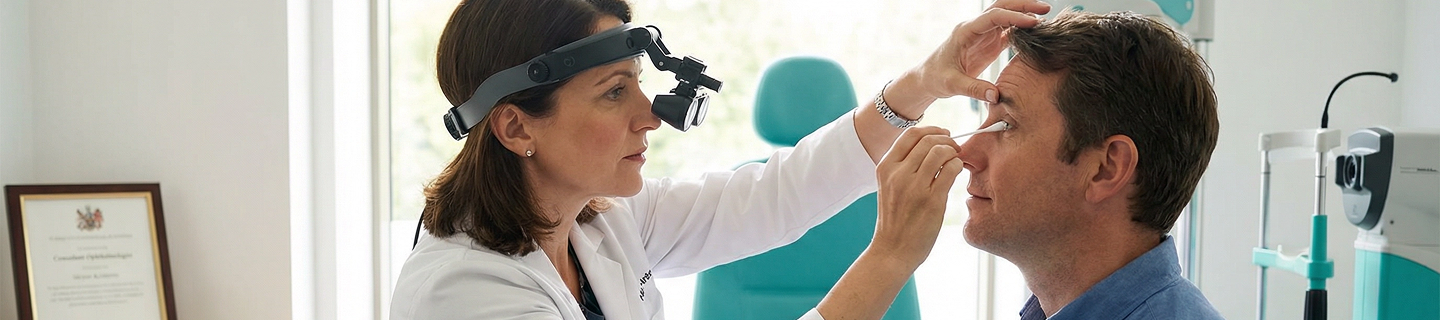
Clinician carrying out a close eye and eyelid examination

NHS Services

Eyelid Lesions and Malpositions

Specialist oculoplastic care for eyelid conditions on the NHS

01

Understanding Eyelid Conditions

The eyelids play an essential role in protecting the eyes, distributing the tear film across the surface of the eye with each blink, and maintaining the health of the cornea. Conditions affecting the eyelids - whether lumps, bumps, or abnormalities of eyelid position - can cause discomfort, affect your appearance, and in some cases threaten your vision.

At CES Medical, our NHS oculoplastic service provides expert assessment and treatment for a wide range of eyelid conditions. Our consultants are experienced in both the functional and aesthetic aspects of eyelid surgery, ensuring that treatment not only addresses the medical concern but also achieves the best possible cosmetic outcome.

02

Eyelid Lesions

Eyelid lesions are lumps, bumps, or growths that develop on or around the eyelids. The vast majority are benign (non-cancerous), but it is important to have any new or changing eyelid lesion assessed by a specialist to exclude malignancy.

Chalazion (Meibomian Cyst)

A firm, painless lump in the eyelid caused by a blocked meibomian gland. Chalazia are very common and are not cancerous. Many resolve spontaneously over several weeks with warm compresses and lid hygiene. If a chalazion persists or is causing significant discomfort or visual disturbance, a minor surgical procedure (incision and curettage) can be performed under local anaesthetic to drain it.
Stye (Hordeolum)

A painful, red lump near the edge of the eyelid, caused by a bacterial infection of an eyelash follicle or eyelid gland. Styes usually resolve within one to two weeks with warm compresses and good lid hygiene. Antibiotic ointment may be prescribed if the infection is persistent.

Papilloma

A benign, skin-coloured or slightly pigmented growth, often with a rough or pedunculated (stalk-like) surface. Papillomas are caused by the human papillomavirus (HPV) and are harmless, though they may be removed for cosmetic reasons or if they are causing irritation.

Cysts

Various types of cysts can develop on the eyelids, including cysts of Moll (sweat gland cysts) and cysts of Zeis (sebaceous gland cysts). These are benign, fluid-filled lumps that can be removed surgically if they are bothersome.

Eyelid Skin Cancers

While less common, malignant lesions can develop on the eyelids. The most common type is basal cell carcinoma (BCC), which typically appears as a painless, pearly nodule that may ulcerate or bleed. Squamous cell carcinoma and sebaceous gland carcinoma are less common but more aggressive. Any eyelid lesion that is growing, ulcerating, bleeding, or causing loss of eyelashes should be assessed promptly. Treatment involves surgical excision with histological examination to ensure complete removal.

Ophthalmology clinician assessing eyelid position and eye surface

Eyelid Malpositions

Eyelid malpositions are conditions in which the eyelid is in an abnormal position, which can affect comfort, appearance, and the health of the eye surface.

Entropion

The eyelid turns inward, causing the eyelashes to rub against the surface of the eye (cornea). This causes irritation, watering, redness, and a gritty sensation, and if left untreated can lead to corneal damage and infection. Entropion most commonly affects the lower eyelid and is usually age-related. Treatment is a minor surgical procedure to reposition the eyelid, performed under local anaesthetic.

Ectropion

The eyelid turns outward, pulling away from the surface of the eye. This exposes the inner surface of the eyelid and prevents the tears from draining properly, causing watering, irritation, and dryness of the eye. Like entropion, ectropion most commonly affects the lower eyelid and is usually age-related. Surgical correction involves tightening and repositioning the eyelid.

Ptosis (Drooping Eyelid)

A condition in which the upper eyelid droops lower than normal, which can obstruct the upper part of your visual field and cause a tired or asymmetic appearance. Ptosis can be present from birth (congenital) or develop later in life (acquired), most commonly due to age-related stretching of the muscle that lifts the eyelid. If ptosis is affecting your vision, surgical correction is available on the NHS.

Dermatochalasis

Excess, redundant skin on the upper eyelids that can hang over the eyelid margin and obstruct the upper visual field. It is a common age-related change. If dermatochalasis is causing a measurable reduction in your visual field, surgical removal of the excess skin (upper lid blepharoplasty) may be available on the NHS.

Diagnosis and Assessment

Your consultant will carry out a thorough clinical examination of the eyelid, assessing the nature of any lesion, the position and function of the eyelid, and the impact on the eye surface and vision. For eyelid lesions, the clinical appearance is often sufficient to make a diagnosis, though a biopsy may be recommended if there is any suspicion of malignancy. For eyelid malpositions such as ptosis and dermatochalasis, measurements of the eyelid position and visual field testing may be performed to determine whether the condition meets the criteria for NHS-funded surgical correction.

03

Treatment and
Surgery

Most eyelid procedures are performed as day cases under local anaesthetic, meaning you can go home the same day. The specific procedure depends on the condition being treated:

01

Incision and Curettage

For persistent chalazia - a small incision is made on the inside of the eyelid to drain the cyst. The procedure takes approximately 15 minutes.

02

Excision Biopsy

For eyelid lesions - the lesion is surgically removed and sent for histological examination. The wound is carefully closed to achieve the best cosmetic result.

03

Eyelid Repositioning Surgery

For entropion and ectropion - the eyelid is tightened and repositioned to restore its normal position against the eye.

04

Ptosis Repair

The muscle that lifts the eyelid is tightened or reattached to raise the eyelid to a more normal position.

05

Upper Lid Blepharoplasty

Excess skin is carefully removed from the upper eyelid to improve the visual field and appearance.

Recovery After Eyelid Surgery

Recovery after eyelid surgery is generally straightforward. You can expect some swelling and bruising around the eyelid for one to two weeks, which gradually resolves. Your consultant will provide specific aftercare instructions, which may include applying cold compresses, using antibiotic ointment, and avoiding strenuous activity for a short period.

When to Contact Us

Contact the clinic promptly if you experience increasing pain, significant swelling, reduced vision, or signs of infection after your procedure.

Your NHS Referral
Pathway

Your GP or optometrist can refer you to CES Medical's NHS oculoplastic service for assessment of eyelid lesions and malpositions. For suspected eyelid skin cancers, an urgent two-week-wait referral pathway is available to ensure rapid assessment and treatment. For functional conditions such as ptosis and dermatochalasis, your referral will include information about the impact on your vision and daily activities.

Specialist oculoplastic care in an eye clinic setting

04

Frequently Asked
Questions

Will I have a visible scar after eyelid surgery?

+

Incisions are usually placed in natural skin creases or on the inside of the eyelid, so scars are typically minimal and fade well over time.

Is eyelid surgery painful?

+

Most procedures are performed under local anaesthetic, so pain during surgery is minimal. Mild discomfort afterwards is common and usually manageable with simple pain relief.

How long does recovery take?

+

Most patients recover over one to two weeks, though full settling of the eyelid can take longer depending on the procedure.

Can a chalazion come back?

+

Yes, some people are prone to recurrent chalazia, especially if meibomian gland dysfunction persists. Lid hygiene can reduce recurrence.

Is cosmetic eyelid surgery available on the NHS?

+

NHS treatment is offered when there is a medical or functional need, such as visual field obstruction or suspected malignancy, rather than for purely cosmetic reasons.

How do I know if an eyelid lump is serious?

+

Any lump that is growing, ulcerating, bleeding, changing colour, or causing loss of eyelashes should be assessed promptly by a specialist.

Expert Eyelid Care on the NHS

To access CES Medical, please ask your Optician to refer you using REGO or your GP using ERS

Our Locations

CES Medical - Chatham

Kent

CES Medical - Headcorn

Kent

CES Medical - Tunbridge Wells

Kent