CES Medical
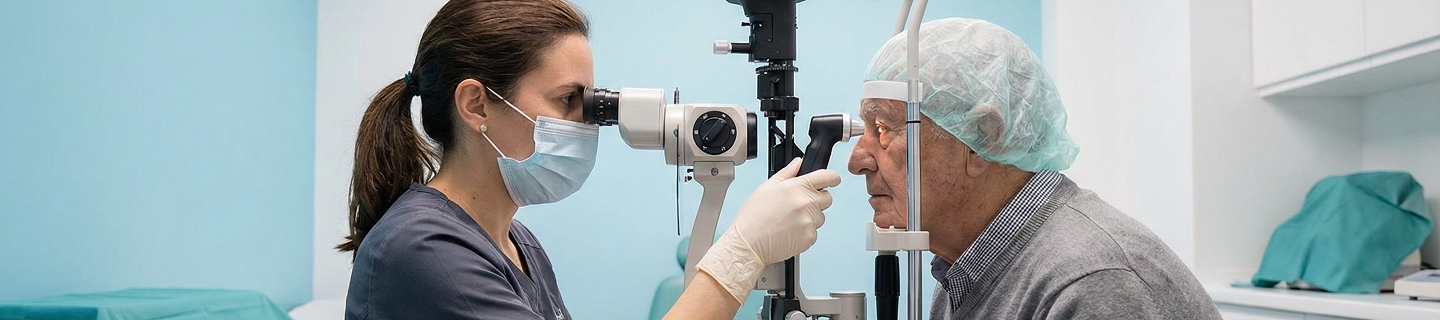
Patient undergoing glaucoma screening with specialist eye imaging equipment

NHS Services

Glaucoma

Expert diagnosis, monitoring, and treatment to protect your vision

01

Understanding
Glaucoma

Glaucoma is a group of eye conditions in which the optic nerve - the nerve that carries visual information from the eye to the brain - becomes progressively damaged. It is one of the leading causes of irreversible blindness worldwide and affects approximately 700,000 people in the United Kingdom, with many more undiagnosed.

The most common form is primary open-angle glaucoma (POAG), which develops slowly over many years. It is usually associated with raised intraocular pressure (IOP) - the pressure of the fluid inside the eye - although glaucoma can also develop at normal pressure levels (normal-tension glaucoma). The damage to the optic nerve causes gradual loss of peripheral (side) vision, which often goes unnoticed until significant damage has occurred.

Early detection through regular eye examinations is critical, because any vision lost to glaucoma cannot be restored. However, with timely diagnosis and appropriate treatment, further vision loss can usually be prevented or significantly slowed.

02

Types of Glaucoma

Primary Open-Angle Glaucoma (POAG)

The most common form, accounting for approximately 90% of cases. It develops gradually when the drainage channels in the eye become less efficient over time, causing a slow build-up of pressure. There are usually no early symptoms, and vision loss begins with the peripheral field before eventually affecting central vision if untreated.

Acute Angle-Closure Glaucoma

A medical emergency that occurs when the drainage angle of the eye becomes suddenly blocked, causing a rapid and severe rise in eye pressure. Symptoms include intense eye pain, headache, nausea, blurred vision, and seeing halos around lights. This requires immediate treatment to prevent permanent vision loss.

Normal-Tension Glaucoma

A form of glaucoma in which the optic nerve is damaged despite the eye pressure being within the statistically normal range. It is managed in a similar way to POAG, with the aim of lowering the eye pressure further to protect the optic nerve.

Secondary Glaucoma

Glaucoma that develops as a result of another eye condition, injury, or medication. Causes include inflammation (uveitic glaucoma), trauma, previous eye surgery, and long-term use of steroid medications.

Ocular Hypertension

A condition in which the eye pressure is higher than normal but there is no detectable damage to the optic nerve. Not everyone with ocular hypertension will develop glaucoma, but it is an important risk factor that requires monitoring. In some cases, preventive treatment may be recommended.

Glaucoma assessment with slit-lamp examination

Risk Factors

Several factors can increase your risk of developing glaucoma:

Age - risk increases significantly after 40, and particularly after 60

Family history - having a close relative with glaucoma increases your risk by four to nine times

Ethnicity - people of African-Caribbean descent are at higher risk of POAG

Short-sightedness (myopia) - associated with increased risk of POAG

Raised intraocular pressure

Thin central corneal thickness

Diabetes and cardiovascular disease

Long-term use of corticosteroid medications

How Is Glaucoma
Diagnosed?

Glaucoma is usually first suspected during a routine eye examination by your optometrist. A comprehensive glaucoma assessment at CES Medical includes several key tests:

Tonometry

Measurement of the intraocular pressure using a specialised instrument. This is a quick, painless test.

Gonioscopy

Examination of the drainage angle of the eye using a special contact lens, to determine whether the angle is open or narrow.

Visual Field Testing

A computerised test that maps your peripheral vision, detecting any areas of vision loss that may indicate glaucoma damage.

OCT of the Optic Nerve

High-resolution imaging of the optic nerve head and the nerve fibre layer of the retina, providing detailed measurements that can detect early structural damage.

Advanced glaucoma imaging and visual field assessment equipment

03

Treatment Options

The goal of glaucoma treatment is to lower the intraocular pressure to a level that prevents further damage to the optic nerve. Treatment is lifelong and requires regular monitoring.

Eye Drops

Medicated eye drops are the most common first-line treatment for glaucoma. Several types are available, including prostaglandin analogues, beta-blockers, carbonic anhydrase inhibitors, and alpha-agonists. Your consultant will prescribe the most appropriate drops based on your individual circumstances. It is essential to use your drops consistently as prescribed, even if you have no symptoms, to maintain adequate pressure control.

Selective Laser Trabeculoplasty (SLT)

A laser treatment that improves the drainage of fluid from the eye, thereby lowering the intraocular pressure. SLT is increasingly used as a first-line treatment for open-angle glaucoma, as the LiGHT trial demonstrated that it is at least as effective as eye drops and avoids the need for daily medication. The procedure is performed as an outpatient, takes only a few minutes, and is painless.

Surgery

If eye drops and laser treatment are insufficient to control the pressure, surgical options may be considered. These include trabeculectomy (creating a new drainage channel), tube shunt surgery (implanting a small drainage device), and minimally invasive glaucoma surgery (MIGS) procedures. Your consultant will discuss the most appropriate surgical option based on the type and severity of your glaucoma.

Your NHS Referral
Pathway

If your optometrist suspects glaucoma or ocular hypertension during a routine eye examination, they will refer you to CES Medical for specialist assessment. We operate a streamlined referral pathway that ensures patients are seen promptly. Your first appointment will include a comprehensive assessment with all the necessary tests to confirm or exclude a diagnosis of glaucoma.

04

Frequently Asked
Questions

Can glaucoma be cured?

+

Glaucoma cannot usually be cured, but it can be effectively managed to prevent or slow further vision loss with ongoing treatment and monitoring.

Will I go blind from glaucoma?

+

Most people do not go blind if glaucoma is diagnosed early and treated appropriately. Regular follow-up is essential to protect your vision.

Do I need to use eye drops forever?

+

Many patients require long-term treatment, but your plan may change over time based on your pressure control and response to treatment.

Is glaucoma hereditary?

+

Yes, family history is an important risk factor. Close relatives of someone with glaucoma should have regular eye examinations.

How often will I need check-ups?

+

The frequency depends on your diagnosis and stability. Some patients are reviewed every few months, while others can be seen less often.

Can I drive with glaucoma?

+

Many people with glaucoma can continue driving if they meet legal visual field and visual acuity standards. Your clinician can advise based on your test results.

Protecting Your Vision from Glaucoma

To access CES Medical, please ask your Optician to refer you using REGO or your GP using ERS

Our Locations

CES Medical - Chatham

Kent

CES Medical - Headcorn

Kent

CES Medical - Tunbridge Wells

Kent