CES Medical
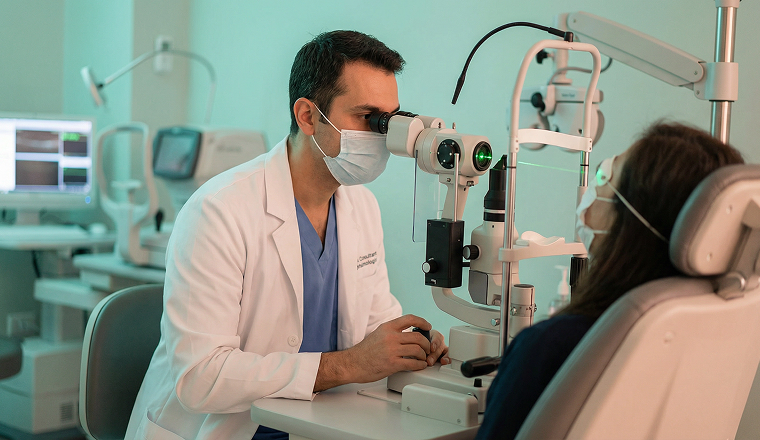
SLT consultation with slit-lamp eye examination

Private Glaucoma Treatment

Protecting Your Vision with Precision Laser Care

Selective Laser Trabeculoplasty (SLT) is a gentle, non-invasive laser treatment that helps lower the pressure inside your eye - a key factor in managing glaucoma and protecting your sight for the future.

NICE recommended as first-line treatment

Quick outpatient procedure - no cuts or stitches

Consultant-led care throughout

01

Understanding
Glaucoma

Glaucoma is a group of eye conditions in which the optic nerve - the vital connection between your eye and your brain - becomes progressively damaged. In most cases, this damage is caused by a build-up of pressure inside the eye, known as intraocular pressure (IOP).

Your eye constantly produces a clear fluid called aqueous humour, which nourishes the front of the eye and maintains its shape. This fluid normally drains away through a fine mesh of channels called the trabecular meshwork. When these drainage channels become less efficient, fluid can accumulate and the pressure inside the eye rises. Over time, this elevated pressure can damage the delicate fibres of the optic nerve, leading to a gradual loss of peripheral (side) vision.

Glaucoma is often referred to as the "silent thief of sight" because it typically develops slowly and without noticeable symptoms in its early stages. By the time a patient becomes aware of vision changes, significant and irreversible damage may already have occurred. This is why regular eye examinations with your optician are so important.

Who is at greater risk?

While glaucoma can affect anyone, certain factors increase your risk:

  • Being over the age of 40
  • Having a family history of glaucoma
  • Being of African or Caribbean heritage
  • Being very short-sighted or long-sighted
  • Having elevated eye pressure (ocular hypertension)

Glaucoma – The
Silent Thief of Sight

02

What Is SLT?

Selective Laser Trabeculoplasty is a gentle laser treatment used to lower eye pressure in patients with open-angle glaucoma or ocular hypertension.

It can be used as a first-line option or alongside existing glaucoma eye drops, depending on your individual treatment plan.

SLT works by delivering very short, low-energy pulses of laser light to the trabecular meshwork - the eye's natural drainage system. These gentle pulses stimulate a biological response that encourages the drainage channels to function more efficiently, allowing fluid to flow out of the eye more freely and reducing intraocular pressure.

The term "selective" refers to the fact that the laser targets only specific pigmented cells within the drainage tissue, leaving the surrounding structures unharmed. This makes SLT a particularly gentle treatment with an excellent safety profile.

SLT has been recommended by the National Institute for Health and Care Excellence (NICE) as a first-line treatment option for open-angle glaucoma. In many cases, SLT can reduce or even eliminate the need for daily eye drops - offering patients a more convenient and sustainable way to manage their condition.

Key Facts

Procedure type

Non-invasive outpatient laser treatment

Duration

Approximately 5-10 minutes per eye

Anaesthesia

Anaesthetic eye drops only (no injections)

Pain level

Generally well tolerated; mild discomfort possible

Incisions

None - no cuts, stitches, or needles

Effectiveness

Reduces eye pressure in approx. 75-80% of patients

Duration of effect

Typically 1-5 years

Repeatability

Can be repeated if the effect diminishes over time

Time in clinic

Approximately 1-2 hours (including preparation)

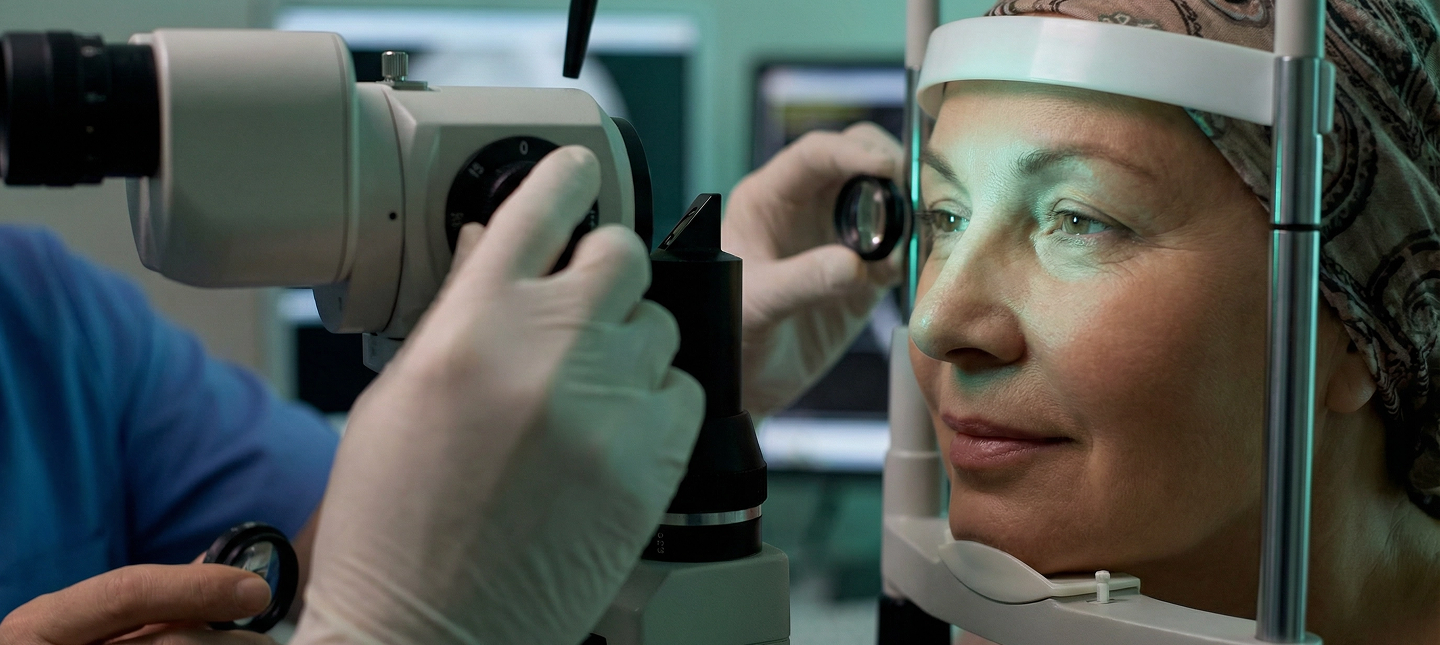
SLT laser treatment equipment in an ophthalmic clinic

03

Your Surgical Journey

Glaucoma surgery lowers eye pressure to protect the optic nerve. It does not restore vision already lost. Continue all regular glaucoma drops unless specifically told to stop.

Pre-Assessment

+

What happens: a full eye examination (IOP measurement, OCT of the optic nerve, visual fields), a discussion of which procedure is most suitable, a review of all medications especially blood thinners, consent, and any pre-operative drops that may be prescribed.

What to tell us: all current medications, especially blood thinners (warfarin, apixaban, rivaroxaban, aspirin, clopidogrel); any allergies; diabetes or other systemic conditions; any previous eye surgery or trauma; if you feel anxious or claustrophobic.

What to bring: your appointment letter and any pre-assessment paperwork, an up-to-date list of all your medications, your current glasses, and a responsible adult to drive you home.

Morning of surgery: arrange transport as you cannot drive; continue all glaucoma drops on the morning of surgery unless told otherwise; wear comfortable clothing that buttons at the front; allow 2 to 4 hours total; no eye makeup or face cream; do not stop any drops without specific instruction.

Day of Surgery

+

1. Arrival and preparation: arrive at the time specified. Drops are administered to prepare the eye, and your surgeon marks and confirms the correct eye.

2. Anaesthetic: local anaesthetic is given (drops, an injection around the eye, or both depending on the procedure). The eye will be completely numb.

3. The procedure: SLT takes 5 to 10 minutes with flashes of light. MIGS takes 15 to 30 minutes, often combined with cataract surgery. Trabeculectomy takes 45 to 60 minutes. You will be awake but should feel no pain.

4. Going home: your eye will be padded or shielded. You are discharged with your escort, a drops prescription, and written aftercare instructions.

Time required: SLT approximately 1 hour total; MIGS approximately 2 hours; trabeculectomy approximately 3 to 4 hours. You must not drive yourself home.

After Surgery

+

Immediately after: rest in the recovery area before discharge; the eye will be padded or shielded with blurred vision; begin prescribed drops as instructed, usually from day 1; your escort drives you home; rest at home for the remainder of the day.

The golden rules: attend all post-operative appointments, initially weekly; perform bleb massage exactly as taught if instructed; use steroid and antibiotic drops exactly as prescribed; wear the eye shield at night for 2 weeks; no bending, lifting or straining for 4 weeks; no rubbing the eye; no swimming for 4 weeks.

Eye drop technique: wash your hands; tilt your head back and pull the lower lid down; look up and do not let the tip touch the eye; squeeze one drop into the pocket; close the eye gently for 60 seconds; press the inner corner for 60 seconds; wait 5 minutes between different drops.

Recovery

+

Timeline: Day 0 to 1, rest at home, eye padded or shielded, vision blurred, begin drops. Week 1, first post-op check and IOP measured; SLT patients usually return to most activities. Weeks 2 to 4, trabeculectomy patients may have suture lysis or bleb massage at clinic visits; MIGS patients usually fully recovered. Month 2 to 3, pressure stabilises and drops may be reduced or stopped. For SLT, the full pressure-lowering effect is reached at 4 to 6 weeks, when IOP is rechecked and drops adjusted.

Restrictions: no swimming for 4 weeks; no hot tubs or saunas for 4 weeks; no bending or heavy lifting for 4 weeks; no eye makeup for 2 weeks; no driving until your vision meets the legal standard and you feel safe.

When to Seek Help

+

Call 01732 756789 immediately if you have: severe eye pain with nausea or vomiting (possible very high pressure); sudden significant vision loss; increasing pain, redness and discharge after trabeculectomy (possible bleb infection); or a flat or very shallow bleb with very low pressure and blurred vision.

Contact us within 24 hours for: redness not settling after day 3; vision significantly worse than expected; discharge from the eye; or concerns about your drop regimen or bleb massage.

Normal and expected: blurred vision on day 1 improving over days; mild redness settling over 1 to 2 weeks; mild grittiness in the first week; some day-to-day vision fluctuation in the first few weeks; slight discomfort under the upper eyelid from a trabeculectomy bleb.

What You Will Experience

Understanding the sensory experience can help ease any concerns. Here is what patients commonly report during SLT treatment.

Mild Pressure

You may feel a gentle sensation of pressure from the contact lens placed on your eye. This is not painful.

Bright Flashes

You will see bright flashes of light as the laser pulses are applied. This is a normal part of the treatment.

Soft Sounds

You may hear a quiet popping or clicking sound from the laser during the procedure.

Brief Duration

The laser treatment itself usually takes only a few minutes. Most patients are pleasantly surprised by how quick it is.

04

Benefits
of SLT

NICE Recommended First-Line Treatment

The National Institute for Health and Care Excellence (NICE) now recommends SLT as a first-line treatment for newly diagnosed open-angle glaucoma. This means SLT can be offered as an initial treatment, potentially before or instead of daily eye drops.

Reduced Dependence on Eye Drops

For many patients, SLT can reduce or even eliminate the need for daily glaucoma eye drops. This is particularly beneficial for patients who find drops difficult to use, experience side effects from drops, or simply prefer a treatment that does not require daily administration.

Repeatable Treatment

Unlike some surgical procedures, SLT can be repeated if the pressure-lowering effect diminishes over time. This gives patients and their consultants flexibility in managing glaucoma over the long term.

Excellent Safety Profile

SLT uses very low energy levels and targets only specific cells, leaving surrounding tissue unaffected. Complications are rare, and the procedure has been performed safely worldwide for over two decades.

05

Why Choose
Private Care?

Rapid Access to Treatment

You can typically have your consultation and treatment scheduled within a few weeks, allowing you to begin managing your eye pressure without delay.

Consultant-Led Care

You will be seen by the same experienced consultant ophthalmologist throughout your treatment - from your initial assessment through to the laser procedure and follow-up - ensuring continuity and a personalised approach to your care.

Dedicated, Comfortable Environment

Our clinics are designed to provide a calm, welcoming experience. You will receive unhurried, individual attention at every stage of your visit.

Consultant discussing SLT treatment benefits with patient
A gentle treatment.
Lasting protection for your sight.

06

Frequently Asked
Questions

We understand that deciding to have laser treatment is an important step. Here are answers to some of the questions our patients most commonly ask.

Is SLT painful?

SLT is generally not painful. Anaesthetic drops are used, and most patients describe only mild pressure or brief discomfort.

How effective is SLT?

SLT is effective for many patients in lowering eye pressure, though individual response varies and is assessed at follow-up.

How long do the effects of SLT last?

The effect can last several years in many patients, but duration varies. The treatment can be repeated if needed.

Can SLT replace my eye drops?

For some patients, yes. Others may still need drops, but often at reduced frequency or dosage.

Can both eyes be treated at the same time?

This depends on your clinical situation and consultant recommendation. Treatment plans are individualised.

When can I drive after the procedure?

You should not drive on the day of treatment due to drops and temporary visual effects. Most people resume driving the next day if vision is clear.

When can I return to work?

Most patients return to normal activities quickly, often the next day, depending on symptoms and job type.

Are there any risks or side effects?

SLT has an excellent safety profile. Temporary redness, mild discomfort, or short-term pressure changes can occur.

Will I still need regular eye check-ups?

Yes. Ongoing monitoring remains essential to track pressure and optic nerve health over time.

Do I need a referral?

No. You can self-refer directly for a private consultation, though referrals from your optometrist or GP are welcome.

Take Control of
Your Eye Pressure

If you have been diagnosed with glaucoma or ocular hypertension, or if you are looking for an alternative to daily eye drops, SLT laser treatment could be the right option for you. Contact us today to book your private consultation.

Our Locations

CES Medical - Chatham

Kent

CES Medical - Headcorn

Kent

CES Medical - Tunbridge Wells

Kent

View our Private Cataract Surgery pageView our YAG Laser Capsulotomy page