
•Gradually worsening blurred or cloudy vision
.png)
NHS Services
Cataract and Lens Related Conditions
Clear vision restored through expert NHS cataract surgery
01
Understanding
Cataracts
A cataract is a clouding of the natural lens inside your eye. The lens sits just behind the coloured part of the eye (the iris) and works much like the lens of a camera, focusing light onto the retina at the back of the eye to produce a clear image. When a cataract develops, the lens gradually becomes less transparent, causing your vision to become hazy, blurred, or washed out over time.
Cataracts are extremely common and are the leading cause of treatable vision loss worldwide. In the United Kingdom, approximately 30% of people aged 65 and over have a visually significant cataract, and around 450,000 cataract operations are performed each year on the NHS - making it the most frequently carried out surgical procedure in the country.
Cataract Concepts
02
Symptoms of Cataracts
Cataracts typically develop slowly, and many people do not notice changes in their vision until the condition has progressed. Common symptoms include:
•Colours appearing faded or yellowish
•Increased difficulty seeing in low light or at night
•Glare or halos around lights, particularly when driving
•Frequent changes in glasses prescription
•Double vision in one eye
If you are experiencing any of these symptoms, it is important to have your eyes examined by an optometrist, who can determine whether a cataract is the cause and refer you for treatment if appropriate.
03
What Causes Cataracts?
The most common cause of cataracts is the natural ageing process. Over time, the proteins within the lens begin to break down and clump together, creating cloudy areas that interfere with the passage of light.
While age-related cataracts are by far the most prevalent, other factors can contribute to or accelerate cataract development. These include diabetes, prolonged use of corticosteroid medications, previous eye surgery or eye injury, excessive exposure to ultraviolet light, smoking, and a family history of early cataract development.
How Are Cataracts Diagnosed?
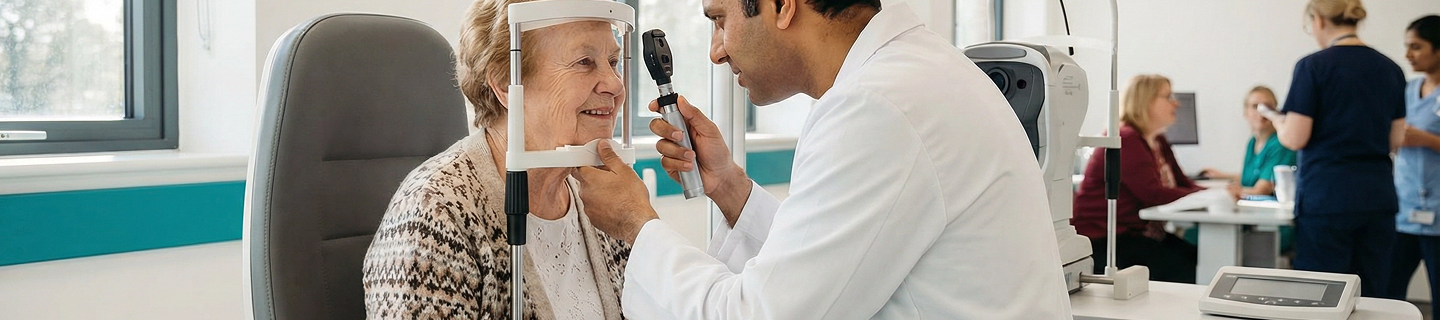
Cataracts are usually detected during a routine eye examination by your optometrist. Using a slit-lamp microscope, they can examine the lens in detail and assess the type and severity of any cataract present. They will also check your visual acuity - how well you can read letters on a chart - and assess how much the cataract is affecting your day-to-day vision. If your cataract is significantly impacting your quality of life, your optometrist will refer you to CES Medical for surgical assessment.
NHS Cataract Surgery at CES Medical
Cataract surgery is the only effective treatment for cataracts, and it is one of the safest and most successful operations performed in modern medicine, with a success rate exceeding 99%. The procedure is carried out as a day case under local anaesthetic, meaning you will be awake but your eye will be completely numb and comfortable throughout.
Cataract surgery is the only effective treatment for cataracts, and it is one of the safest and most successful operations performed in modern medicine, with a success rate exceeding 99%. The procedure is carried out as a day case under local anaesthetic, meaning you will be awake but your eye will be completely numb and comfortable throughout.
Cataract surgery is the only effective treatment for cataracts, and it is one of the safest and most successful operations performed in modern medicine, with a success rate exceeding 99%. The procedure is carried out as a day case under local anaesthetic, meaning you will be awake but your eye will be completely numb and comfortable throughout.
What to Expect on the Day of Surgery
You will be asked to arrive at the clinic approximately one hour before your scheduled procedure time. Eye drops will be administered to dilate your pupil and numb your eye. You will be taken into the operating theatre and made comfortable on a reclining bed. Throughout the procedure, you will be aware of a bright light and may see some colours and shapes, but you will not feel any pain.
After surgery, a protective shield will be placed over your eye, and you will be given eye drops to use at home along with detailed aftercare instructions. You will need someone to drive you home after the procedure, as your vision will be blurry for the rest of the day.
Most patients are able to return to their normal activities within a day or two, though you should avoid rubbing your eye, swimming, and heavy lifting for the first few weeks.
Recovery and Aftercare
Your consultant will arrange a follow-up appointment to check your eye is healing well, typically within one to four weeks of surgery. You will be prescribed a course of anti-inflammatory and antibiotic eye drops to use for several weeks after the operation. Most patients find that their vision improves significantly within the first few days, and many are able to reduce their dependence on glasses for distance vision, though reading glasses are usually still needed.
Other Lens Related Conditions
In addition to cataracts, CES Medical's NHS service covers other conditions affecting the lens of the eye. These include posterior capsule opacification (PCO), which can develop months or years after cataract surgery when the thin membrane behind the artificial lens becomes cloudy. PCO is easily treated with a quick, painless YAG laser procedure that takes just a few minutes. We also manage lens subluxation and dislocation, where the natural or artificial lens shifts from its normal position, which may require further surgical intervention.
Your NHS Referral
Pathway
If your optometrist identifies a cataract that is affecting your vision, they can refer you directly to CES Medical's NHS cataract service. You do not need to see your GP first. Once we receive your referral, our team will contact you to arrange a pre-assessment appointment, during which we will take detailed measurements of your eye to select the most appropriate artificial lens for your surgery.
04
Why Choose CES
Medical for NHS
Cataract Surgery
Consultant-Led Surgery
All cataract operations are performed by experienced consultant ophthalmologists, ensuring the highest standards of surgical expertise and patient safety.
Over 99% Success Rate
Cataract surgery at CES Medical achieves outcomes that meet or exceed national benchmarks, with a complication rate well below the national average.
Community-Based Clinics
Our clinics in Maidstone, Sevenoaks, and Tunbridge Wells bring NHS cataract surgery closer to your home, reducing the need to travel to busy hospital departments.
Minimal Waiting Times
We work hard to offer prompt appointments and short waiting times for surgery, getting you back to clear vision as quickly as possible.
.png)
05
Frequently Asked
Questions
Is cataract surgery painful?
+
Cataract surgery is not usually painful. Your eye is numbed with anaesthetic drops, and most patients only notice light and gentle pressure.
How long does the surgery take?
+
The operation itself is usually around 15 to 30 minutes, though your total time in clinic will be longer for preparation and recovery checks.
Will I need glasses after cataract surgery?
+
Many people still need glasses for some activities after surgery, depending on the lens used and your individual prescription.
Can cataracts come back after surgery?
+
The cataract does not come back. Some patients develop clouding of the capsule behind the lens implant, which can be treated quickly with YAG laser.
What are the risks of cataract surgery?
+
Cataract surgery is very safe, but like all surgery it carries some risks such as infection, inflammation, or retinal problems. Your consultant will explain these clearly.
How soon can I drive after cataract surgery?
+
You should not drive on the day of surgery. You can drive again once your vision meets legal standards and your clinician confirms it is safe.
Ready to Restore Your Vision?
To access CES Medical, please ask your Optician to refer you using REGO or your GP using ERS
Our Locations

CES Medical - Chatham
Kent
CES Medical - Headcorn
Kent
CES Medical - Tunbridge Wells
Kent